Food Photography Props and Backgrounds: How to Build Your Kit on Any Budget
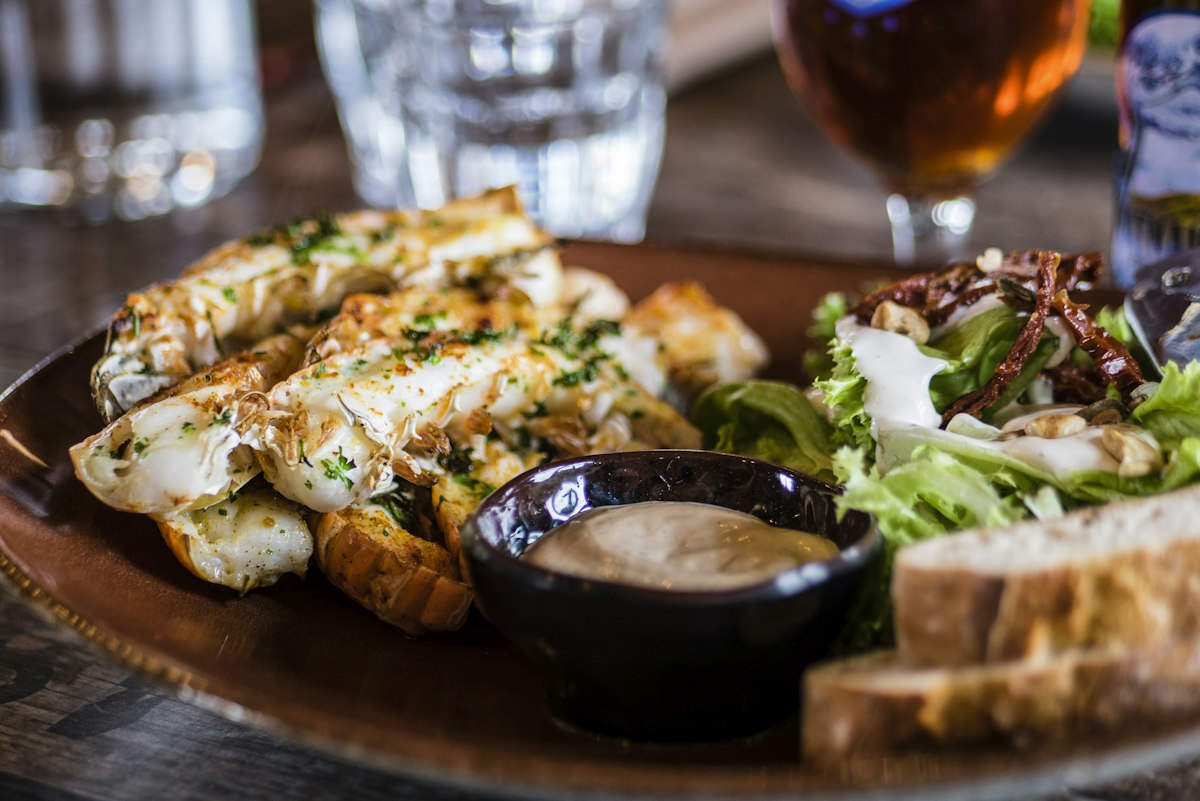
The props and backgrounds in a food photograph do one job: they tell the viewer what kind of food experience to expect. A rustic wooden board signals hearty, artisanal food. A sleek dark slate surface says elevated, modern cuisine. A soft linen cloth suggests a relaxed, European bistro. Getting this visual language right — without overspending on a large collection of props you'll rarely use — is the practical challenge this guide addresses.
The Role of Props: Context, Not Clutter
The most common mistake in food photography styling is over-propping: filling the frame with so many objects that the food itself is lost. Professional food stylists operate by a different principle — every prop in the frame must earn its place by adding context or depth to the story the image is telling. A sprig of fresh herb placed beside a dish reinforces freshness. An antique spoon suggests a homemade recipe with heritage. A scattered pinch of spice echoes the flavours in the dish.
The practical rule: start with the food alone, then add one prop at a time and ask whether each addition improves the image. The optimal number of props for most food photos is zero to three. Beyond three, you are almost always adding noise rather than context.
Plates and Serveware: Your Most Important Props
The plate or bowl your food is served in is the most important prop in any food photograph, because it occupies the most space and directly frames the food. Key principles for selecting serveware for photography:
- White and off-white plates: The universal default. They reflect light, keep the focus on the food, and photograph cleanly at any angle. Every food photographer should own at least two white plates of different sizes.
- Dark matte ceramics: Ideal for pale or cream-coloured foods — pasta, risotto, fish — where contrast against the plate makes the food pop. Matte surfaces avoid reflections that complicate lighting.
- Textured and handmade ceramics: The slightly irregular surface and artisanal quality of hand-thrown ceramics adds a premium, independent-restaurant feel that resonates strongly on social media.
- Avoid busy patterns: Patterned plates compete visually with the food and create difficulties when cropping or retouching images.
Budget sourcing: charity shops and second-hand stores are excellent sources for unique, inexpensive ceramics. IKEA's white OFTAST plate range is specifically popular among food photographers for its clean profile and low cost (under $3 per plate).
Cutlery and Linens: Texture and Scale
Cutlery placed in a food photograph serves two purposes: it provides scale reference (helping viewers understand portion size) and adds visual rhythm to the composition. Matte stainless steel or aged brass cutlery photographs better than highly polished silver, which creates distracting reflections under directional light.
Linen napkins and tea towels add texture and warmth to the bottom layer of a composition — the surface below the plate. Natural linen in off-white, slate grey, or warm beige works with almost every food style. Avoid bright colours and busy prints. A single softly folded linen napkin tucked beneath a plate, or loosely arranged beside it, adds the kind of tactile warmth that makes a food photograph feel inviting rather than clinical.
Backgrounds: The Foundation of Your Shot
You need fewer backgrounds than you think. The professional benchmark: own two or three backgrounds that cover the full tonal range — one light, one dark, one mid-tone — and you can handle almost any food photography scenario.
- Light wood: Warm, natural, and versatile. Works particularly well with breakfast foods, baked goods, salads, and casual dishes. Real reclaimed wood boards are available inexpensively from timber merchants or salvage yards. A 60 × 60cm piece of pine plank, sanded and lightly oiled, is a practical and authentic alternative.
- Dark slate or stone: Cool and dramatic, ideal for fine dining presentations, cocktails, dark chocolate, and charcuterie. Real slate tiles are available at tile merchants for under $15 each. Vinyl slate-effect wrap (available on Amazon) is an affordable alternative that photographs almost identically.
- White or grey marble: The most versatile background in food photography. Works for every food category. Real marble is expensive; marble-effect vinyl wrap is the standard professional workaround — $20–30 for a 60 × 90cm sheet that is reusable, cleanable, and convincing in photographs.
- Painted concrete or plaster: A dark charcoal or aged white painted surface adds texture and an urban, contemporary feel. This is the easiest DIY background: paint a piece of MDF or a foam board and texture it with a brush or sponge for a few dollars.
DIY Backgrounds: The Best Value in Food Photography
The food photography industry's best-kept secret is that most professional-looking backgrounds are handmade. A sheet of MDF from a hardware store ($5–10), painted with chalk paint or textured with dry brushing techniques, produces backgrounds indistinguishable from expensive commercial alternatives. Common DIY approaches:
- Aged wood effect: Brush raw wood with a diluted grey paint wash, then sand back to reveal the grain. Produces a weathered, farmhouse aesthetic.
- Textured plaster: Apply ready-mixed filler to MDF with a palette knife, allow to dry, then paint in your chosen colour. Creates a tactile, artisanal surface that catches directional light beautifully.
- Linen-covered boards: Stretch natural linen fabric over a foam board and staple it at the back. Provides a soft, fabric texture for a warm, editorial aesthetic.
Matching Props and Backgrounds to Food Style
The guiding principle is contrast and coherence: the visual style of your props should amplify what is distinctive about your food, not compete with it. Rustic props (worn wood, rough linen, hand-thrown ceramics) suit comfort food, bakery items, and hearty mains. Sleek props (dark slate, matte ceramics, clean linen) suit modern, restaurant-quality plating. Bright, colourful props (coloured ceramics, bold backgrounds) suit vibrant, fresh cuisine — salads, poke bowls, smoothies, and tropical dishes.
Avoid mismatches that send conflicting signals — a fine-dining dish plated on rustic wood beside a plastic fork, or a casual burger on a pristine marble surface with silver cutlery. Coherence between the food and its visual context builds trust with the viewer.
AI Enhancement as the Finishing Touch
Even with the ideal props and backgrounds, real-world food photography encounters imperfect conditions: uneven lighting, colour casts from artificial light sources, slight blurriness from a handheld shot. FoodieFixer applies AI enhancement as a final step — correcting colour balance, improving sharpness, and in cases where the background needs replacing entirely, removing it automatically. Starting from $0.30 per image, it closes the gap between a well-composed shot and a publication-ready result without requiring editing expertise.
The combination of thoughtful props and backgrounds with AI post-processing is the most cost-effective route to professional food photography output. The props establish the visual context; the AI ensures the technical quality. Neither alone is as powerful as both together.
Key Takeaways
- Props should add context to your food story — not clutter. Aim for zero to three props per shot.
- White plates are the universal default; dark matte ceramics create contrast with pale foods; handmade ceramics signal premium quality.
- You need two or three backgrounds — one light (marble or light wood), one dark (slate or charcoal), one mid-tone — to cover all scenarios.
- Vinyl wrap backgrounds (marble-effect, slate-effect) are the best value option: $20–30 for a surface that photographs identically to real stone.
- DIY painted MDF backgrounds cost under $10 and produce results indistinguishable from commercial alternatives.
- Match your prop style to your food style: rustic for comfort food, sleek for fine dining, bright for fresh and vibrant cuisine.
- AI enhancement with FoodieFixer provides the finishing step — correcting colour, sharpness, and background quality — to turn a well-styled shot into a publication-ready image from $0.30.