Food Photography Composition: Rules and Techniques That Work
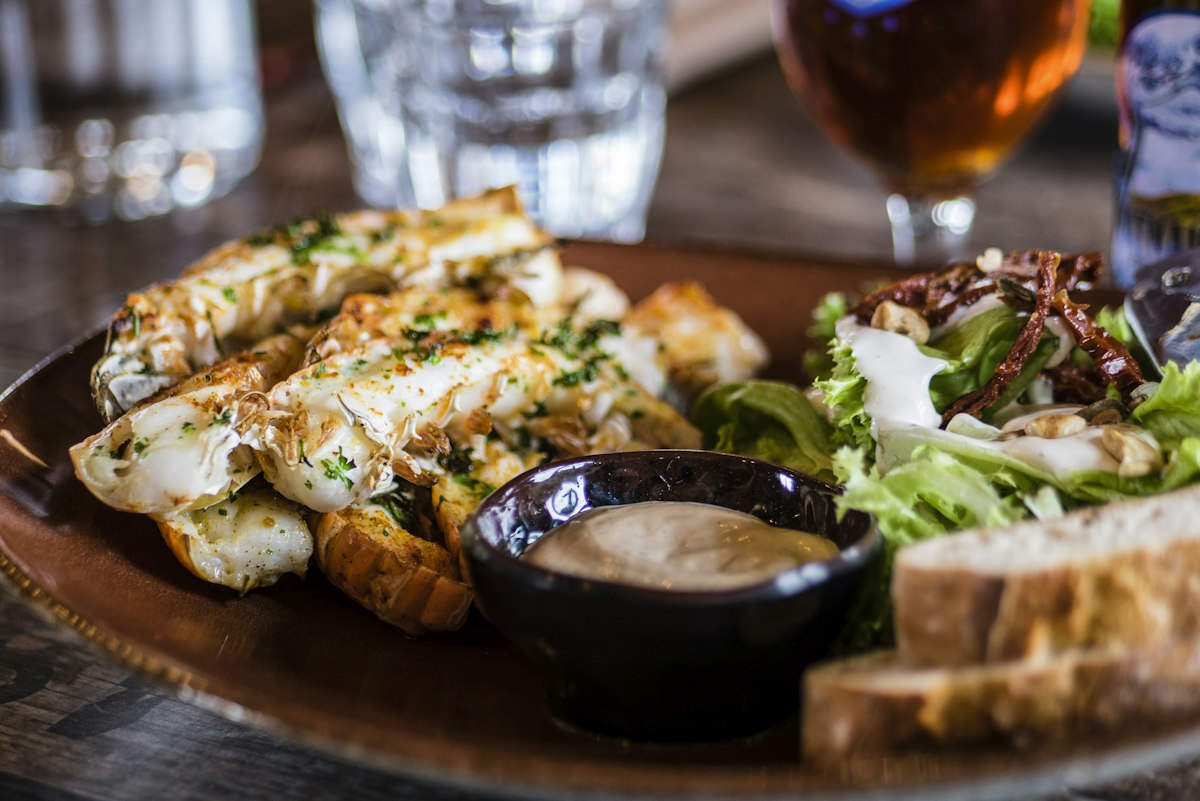
Great food photography is built on great composition. Composition is the deliberate arrangement of elements within your frame—where you place the food, what surrounds it, how the viewer's eye moves through the image. Master these fundamentals and your photos will look more professional immediately, regardless of your camera or budget.
The Rule of Thirds
The rule of thirds is the most important composition principle in photography. Imagine dividing your frame with two horizontal lines and two vertical lines (a 3×3 grid). Place your main subject at one of the four intersection points rather than dead center. This creates a more dynamic, naturally pleasing composition.
Most smartphones have a grid overlay option in camera settings. Turn it on and practice aligning your subject to these intersection points until it becomes instinctive.
Negative Space: The Power of Emptiness
Negative space—the empty area around your subject—is a powerful compositional tool. Leaving open space around your dish gives the image room to breathe, draws the eye to the food, and creates a sense of calm elegance that cluttered photos can't achieve.
For food photography, a clean marble surface, a wooden board, or a plain linen cloth in the background creates negative space that frames and elevates your subject. Resist the urge to fill every corner of the frame.
Leading Lines
Leading lines are visual elements that guide the viewer's eye through the image toward your main subject. In food photography, these can be:
- A wooden board's grain direction
- A row of dishes or ingredients
- Cutlery arranged diagonally toward the food
- A drizzle of sauce or a scatter of herbs
- The edge of a table or cutting board
Use leading lines to draw the eye from the edge of the frame toward your hero element. Lines that enter from a corner and point toward the subject are particularly effective.
Layering: Depth and Dimension
Flat compositions look two-dimensional. Layering creates visual depth that makes photos feel more immersive. In food photography, layering means:
- Foreground elements: A scattered spice or herb in the very front of the frame, slightly out of focus, creates depth.
- Mid-ground subject: Your hero dish in clear, sharp focus.
- Background elements: Soft, blurred props that add context without competing for attention.
This foreground–subject–background structure creates the illusion of a three-dimensional scene, making the viewer feel like they're looking at real food rather than a flat image.
The Odd Number Rule
When styling multiple elements in a shot (multiple dishes, a spread, garnishes), odd numbers—1, 3, 5—are more visually appealing than even numbers. Three croissants look better than two or four. Five strawberries scattered around a dessert feel more natural than six. This principle comes from how our brains perceive groups: odd numbers feel dynamic and natural, even numbers feel static and symmetrical.
The Hero Shot: Make One Element the Star
Every great food photo has a clear hero—one element that is the undisputed focal point. The composition should be built to direct attention to that hero and nothing else. If a viewer can't immediately identify the most important element in your photo within two seconds, your composition needs simplifying.
Choose your hero before you start composing. Is it the perfectly seared salmon? The caramel drizzle? The cross-section of a juicy burger? Build your composition to showcase that element at its absolute best.
Framing with Props
Props serve two compositional purposes: they add context to your food story, and they can frame your subject to draw the eye inward. A ring of ingredients around a central dish, or partial plates and glasses at the edges of the frame, creates a frame-within-a-frame effect that focuses attention on your hero element.
Keep props simple and intentional. Every prop should either add visual interest, provide scale reference, or tell part of the story. If you can remove a prop and the photo looks the same or better, it shouldn't be there.
Putting It All Together
Strong composition is a habit, not an accident. Before pressing the shutter:
- 1. Identify your hero element.
- 2. Choose an angle that shows it best (overhead, 45°, or eye level).
- 3. Position it using the rule of thirds.
- 4. Add supporting elements to create depth and leading lines.
- 5. Check the edges of the frame for distracting elements and remove them.
- 6. Assess the negative space—is there enough room to breathe?
- 7. Shoot, review, adjust, and shoot again.
After composing and shooting, AI enhancement with FoodieFixer.app can perfect the technical aspects—lighting, color, sharpness—so your compositional work shines through in the final image.