How AI Is Changing Food Photography for Restaurants and Food Businesses
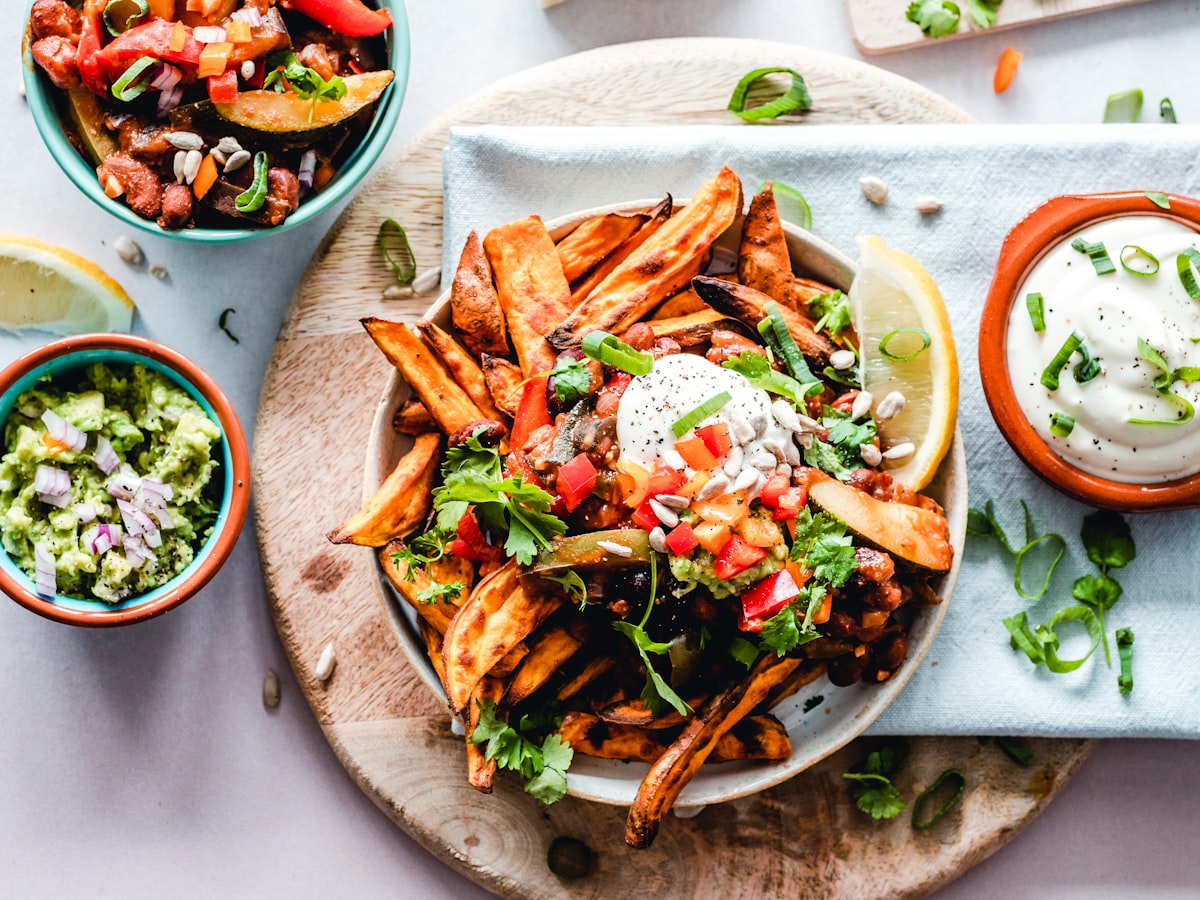
Until recently, professional-quality food photography required three things most small food businesses couldn't afford: a professional photographer, expensive editing software, and hours of retouching time. Artificial intelligence is dismantling this barrier entirely. The transformation is structural and permanent — AI is not a trend improving on the margin, but a fundamental shift in how food imagery is produced, enhanced, and distributed at scale.
The Old Model: Why Food Photography Was Inaccessible
Professional food photography has historically been an expensive, time-consuming process. A commercial food photographer in a major market charges between $500 and $5,000 per day, plus styling, props, and post-production. A full menu shoot for a mid-size restaurant — covering twenty to forty dishes — could easily exceed $10,000. Post-production retouching at professional rates adds $50–200 per image. For large restaurant groups and consumer food brands, this investment made financial sense. For independent restaurants, cafés, and food entrepreneurs, it was simply out of reach.
The alternative — low-quality smartphone photos uploaded without enhancement — consistently underperforms. Research by the Food Marketing Institute and independent platform studies has demonstrated repeatedly that high-quality food imagery directly correlates with higher order volumes, better review ratings, and increased customer trust. The photography gap was, in practical terms, a revenue gap.
How AI Image Enhancement Works
Modern AI food photo enhancement is built on deep learning models trained on millions of food images. These models have learned to identify what makes food look appealing — the right colour temperature for proteins, the saturation levels that make produce look fresh, the contrast ratios that give dishes depth — and apply these learned optimisations automatically to new images.
Specifically, AI enhancement tools address the most common problems in non-professional food photography:
- Colour correction: Restaurant lighting (tungsten, fluorescent, LED) creates colour casts that make food look unappetising. AI models trained on food imagery can identify and correct these casts with precision that manual editing requires significant expertise to match.
- Exposure and contrast: Food photographed in low-light environments or against bright backgrounds suffers from poor exposure. AI adjusts tonal curves to bring out detail in both highlights and shadows simultaneously.
- Background removal: Cluttered kitchen or restaurant backgrounds distract from the food. AI segmentation models accurately identify the food subject and remove or replace the background in seconds.
- Sharpness and detail: AI upscaling and sharpening algorithms enhance fine detail — the texture of a bread crust, the sheen of a sauce — without introducing the artefacts that traditional sharpening tools produce.
Democratisation: Who Benefits and How
The businesses that benefit most from AI food photography enhancement are precisely those that were previously excluded from the professional photography market:
- Independent restaurants: Can now produce gallery-quality images of every menu item without a photography budget, enabling competitive listings on Google, Yelp, and TripAdvisor.
- Food delivery operators: Uber Eats, DoorDash, and JustEat all apply algorithmic ranking boosts to listings with high-quality images. AI enhancement makes this accessible at scale.
- Food bloggers and influencers: Can produce consistent, professional-quality imagery without mastering complex editing software.
- Food entrepreneurs and product sellers: Can produce e-commerce-ready product photography without renting a studio.
AI vs. Traditional Retouching: A Practical Comparison
Traditional manual retouching in Lightroom or Photoshop by a skilled editor produces excellent results — but requires 15–45 minutes per image, specialist software knowledge, and ongoing subscription costs. AI enhancement tools process the same image in seconds, with no software expertise required, at a fraction of the cost.
For high-stakes commercial photography — a national advertising campaign or a premium cookbook — a skilled human retoucher remains the gold standard. For the day-to-day image production needs of a restaurant, food business, or food content creator, AI enhancement delivers comparable results faster and at dramatically lower cost.
Where FoodieFixer Fits in the AI Food Photography Ecosystem
FoodieFixer is purpose-built for food businesses that need professional-quality images at production volume. Upload a photo taken on any device — smartphone, tablet, entry-level camera — and the AI automatically applies food-specific enhancement: colour correction calibrated for food subjects, contrast and sharpness optimisation, and optional background removal. The result is a platform-ready image in under a minute, starting from $0.30 per image.
Unlike general-purpose photo editing apps, FoodieFixer's models are trained specifically on food imagery, which means the enhancement decisions — which colours to boost, which textures to emphasise — are optimised for appetite appeal rather than generic aesthetic standards.
The Future of AI in Food Photography
The capabilities of AI food imagery tools are advancing rapidly. Current enhancement tools correct and improve existing photographs. Near-term developments include AI-assisted styling guidance (real-time suggestions for improving composition and styling before the shot is taken), automated batch processing of entire menu libraries, and dynamic image personalisation — displaying different food photo styles to different customer segments based on browsing behaviour.
For restaurants and food businesses that have not yet integrated AI enhancement into their image workflow, the competitive gap is growing. Businesses that adopt these tools now establish a systematic advantage in visual presentation across every digital channel where food images influence customer decisions.
Key Takeaways
- Professional food photography was historically inaccessible to independent restaurants and small food businesses due to cost — AI is eliminating this barrier.
- AI enhancement tools correct colour, exposure, sharpness, and background issues automatically, in seconds, using models trained specifically on food imagery.
- Independent restaurants, food delivery operators, bloggers, and food entrepreneurs all benefit from the democratisation AI enables.
- For everyday production needs, AI enhancement matches or exceeds manual retouching quality at a fraction of the time and cost.
- FoodieFixer provides food-specific AI enhancement from $0.30 per image — making professional visual presentation achievable for any food business.
- AI food photography capabilities are advancing rapidly; businesses that adopt these tools now establish a durable competitive advantage.